
Recent Challenges to the First Amendment and a History of the Right to Protest
Tyler Horton ‘26
Introduction
Over the past year, there have been thousands of large protests across the United States of America on several societal issues. In June and October, millions of Americans rallied together to participate in “No Kings” protests in all fifty states in opposition to Donald Trump and his administration. Other notable protests include the numerous demonstrations against the Trump Administration’s immigration policies. Primarily, the mobilization of the national guard to meet protestors in the streets, and the mass federal immigration raids in many of America’s major cities, including Charlotte, North Carolina. The federal immigration operations in Los Angeles, California, caught major media attention from around the world. The protests lasted for days, during which law enforcement officials used tear gas, pepper spray, and rubber bullets on protestors, escalating demonstrations that were initially peaceful.
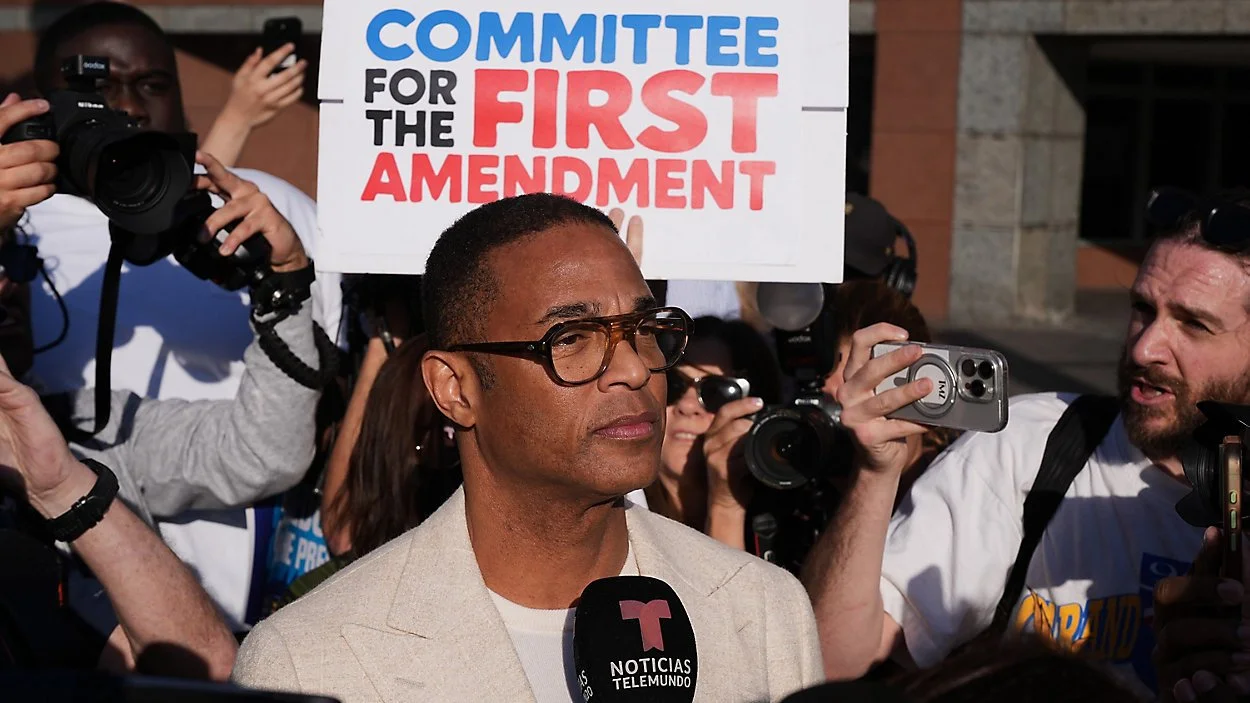
It is not a secret that political tension within the United States is at an all-time high, and Americans have been very adamant about exercising their First Amendment rights of speech and to protest. More recently, in January of 2026, ICE carried out operations in Minneapolis, sparking even more protests. The shootings of Rene Good and Alex Pretti sparked outrage since they were killed while protesting in some form or fashion. Former CNN host Don Lemon, who now works as an independent journalist, was arrested following a protest that interrupted a church service at Cities Church in St. Paul, Minnesota. According to Lemon, he is not affiliated with the group and was there in his capacity as a journalist, live-streaming the protest to chronicle the event. The arrest raised many questions regarding the constitutionality of Lemon’s actions and whether or not the federal government infringed on his First Amendment rights as a journalist. As well as the rights of the other protestors, who are facing charges from the same protest. This story is but one example of how journalism in the United States is being challenged in recent months, and the legality of the federal government’s responses to widespread protests against the Trump Administration.
First Amendment Overview
When discussing journalism and protesting, it is crucial to understand the First Amendment to the United States Constitution. The amendment is arguably the most well-known and one of the most important. According to the National Constitution Center, the amendment states, “Congress shall make no law respecting an establishment of religion, or prohibiting the free exercise thereof; or abridging the freedom of speech, or of the press; or the right of the people peaceably to assemble, and to petition the Government for a redress of grievances.” The right of the people to peaceably assemble and the freedom of speech are the two essential clauses of the First Amendment that protect the ability of Americans to protest. These protections are in place to prohibit the government from overreaching; but private employers and companies have more freedom to determine what is allowed and prohibited under their authority. However, the government can place restrictions on speech and protesting when categories such as obscenity and threats that may incite lawless actions.
History of the First Amendment in the Courts
Freedom of speech is necessary to protest freely, and to speak freely does not mean freedom from consequences. In the case of Schenck v. United States (1919), the Supreme Court ruled that the government or the judiciary can limit free speech in circumstances where speech presents itself as an imminent threat to the harm of others. This led to the creation of the clear and present danger legal test that courts used for several years to determine if speech could harm others. Over time, the legal test began to show weaknesses in cases that involved differentiating circumstances when it was applied, which was broad. Schenck v. United States does not have any immediate relevance in today’s legal system, and the clear and present danger test was retired. The importance of Schenck’s decision laid the foundation for an improved legal standard to be used in cases of free speech: the “imminent lawless action test”. In the case of Brandenburg v. Ohio (1969), the Supreme Court ruled that speech advocating for illegal misconduct that does not incite imminent, lawless action is protected by the First Amendment.
Regarding the right to protest, several cases have dealt with it heavily. In Edwards v. South Carolina (1963), the Supreme Court ruled that nonviolent, orderly protests were protected under the First Amendment of the United States Constitution. The decision heavily limited states’ ability to criminalize or silence peaceful protests. In Edwards v. South Carolina, 187 African American students were convicted of breach of peace for assembling orderly at the South Carolina State Government in an attempt to submit a protest of grievances. The students were arrested after being asked to disperse, despite a lack of evidence shown in court, and they argued that their due process rights were denied. The Supreme Court sided with the students and delivered the previously mentioned ruling. Later, in 1989, the Supreme Court once again addressed speech and protest rights in Texas v. Johnson. Gregory Lee Johnson was arrested for burning a flag in Dallas, Texas, outside the Republican National Convention in protest of President Ronald Reagan’s Administration. Johnson was arrested and convicted under a state law prohibiting the desecration of objects with deep respect for them. The conviction was appealed to the Texas Court of Criminal Appeals and was affirmed by the Supreme Court of the United States. The decision affirmed that it cannot prohibit or infringe on the expression of an idea or speech just because it may be found offensive by society. The First Amendment protects speech considered to be “symbolic”, a protection that ensures the right to protest cannot be suppressed simply because people or the government may not agree with what others have to say or express.
The Current State of the Right to Protest and Its Future
A fairly recent example of a challenge to protesting in modern America, on August 25th, 2025, the precedent of Texas v. Johnson was tested by an executive order signed by President Trump. The executive order directs the Department of Justice and the Attorney General, Pam Bondi, to prosecute those who participate in the act of burning the American Flag. The order particularly targets individuals who burn the American flag with the intention to incite violence or lawlessness in the United States. The language structure within the executive order steers away from violating the Supreme Court’s decision in Texas v. Johnson. Nonetheless, legal experts and analysts have expressed a number of concerns about how constitutional the President’s executive order actually is. As well as where the line is drawn with the Supreme Court decision nearly forty years ago about symbolic speech protections.
As stated previously, the divided political state of America has led to debates over the ability to exercise speech freely and what is considered peaceful protesting in the eyes of the American legal system. With public opposition against the Trump Administration and the determination of Americans to be heard while pushing back against government censorship, protesting continues to be a major topic of discussion. Challenges to journalists, such as Don Lemon, raise concerns about how journalism and the media face potential infringement from the government for political purposes. As long as protests remain peaceful and do not lead to demonstrations that harm any individual or groups, then government or law enforcement intervention is likely to not be well received by the American people. It is important, especially in times of heated political tension, to remember that the freedoms of the First Amendment protect every citizen of the United States. The ability to protest and speak up against injustice or push the government to do better for its citizens. This is a power that can not be taken away; it will continue to be tested for years and decades to come. It is the responsibility of the people to hold their leaders accountable and use their voices in the way the Constitution intends.
Tyler Horton is a senior majoring in political science.
Sources
Amar, Vikram D., and Jason Mazzone. “What to Make of President Trump’s Executive Order on Flag Burning.” Justia, September 5, 2025. https://verdict.justia.com/2025/09/05/what-to-make-of-president-trumps-executive-order-on-flag-burning
“Brandenburg v. Ohio.” Oyez, 2026. https://www.oyez.org/cases/1968/492.
“Constitution of the United States.” Congress.gov, 2026. https://constitution.congress.gov/constitution/amendment-1/
“Edwards v. South Carolina.” Oyez, 2026. https://www.oyez.org/cases/1962/86.
Jeff Brady, Joe Hernandez. “4 things to know about the immigration raid protests that roiled LA this weekend.” NPR, June 9, 2025. https://www.npr.org/2025/06/09/nx-s1-5427215/what-to-know-los-angeles-protests-ice-trump
Karnowski, Steve. “Don Lemon pleads not guilty to civil rights charges in anti-ICE Minnesota church protest.” PBS News, February 13, 2025. https://www.pbs.org/newshour/politics/don-lemon-pleads-not-guilty-to-civil-rights-charges-in-anti-ice-minnesota-church-protest
Katie Nicholson, Rhianna Schmunk, and Sarah Petz. “Thousands converge on Minneapolis and across U.S. to protest ICE enforcement after shootings.” CBC, January 10, 2026. https://www.cbc.ca/news/world/livestory/ice-shooting-minneapolis-portland-protests-live-updates-9.7041064
Marc Levy, Claudia Lauer, and Jim Vertuno. “Protesters gather across the U.S. at nationwide anti-Trump 'No Kings' rallies.” PBS News, June 14, 2025. https://www.pbs.org/newshour/politics/protesters-gather-across-the-u-s-at-nationwide-anti-trump-no-kings-rallies
“Schenck v. United States.” Oyez, 2026. https://www.oyez.org/cases/1900-1940/249us47.
Sozan, Michael. “Americans Continue To Build a Peaceful Mass Movement To Force Trump Administration Changes.” Center for American Progress, October 28, 2025. https://www.americanprogress.org/article/americans-continue-to-build-a-peaceful-mass-movement-to-force-trump-administration-changes/
Stelter, Brian, et al. “Journalist Don Lemon promises to fight federal charges following his arrest after Minnesota church protest.” CNN, January 30, 2026. https://www.cnn.com/2026/01/30/politics/don-lemon-custody
“Texas v. Johnson.” Oyez, 2026. https://www.oyez.org/cases/1988/88-155.
